By NEIL A. LEWIS
Published: November 19, 2009
New York Times
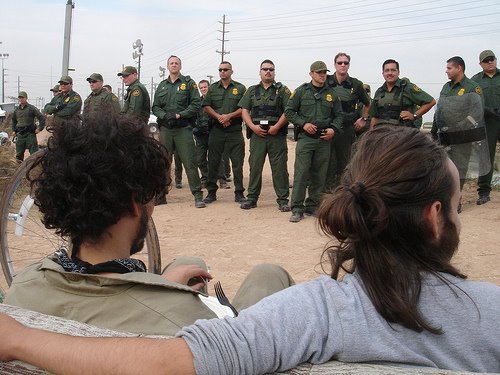
WASHINGTON — Immigration enforcement officials said Thursday that they were expanding a program for auditing companies that might have hired illegal immigrants and had notified 1,000 companies this week that they would have to undergo such a review.
John Morton, who heads Immigration and Customs Enforcement, known as ICE, announced the new initiative, saying it was part of the administration’s plan to deal with companies that hire illegal workers. “ICE is focused on finding and penalizing employers who believe they can unfairly get ahead by cultivating illegal workplaces,” Mr. Morton said.
He said that because the program was a law enforcement operation, he would not identify the companies that would undergo an audit except to say that they had been selected as a result of investigative leads and their connection to public safety and national security.
The language suggests the audits will affect private companies involved in infrastructure operations like gas and electric utilities and contractors on military bases but not retailers and manufacturers of nonessential goods.
The announcement of the action appears to be part of a two-pronged strategy by Homeland Security officials to crack down on companies that regularly rely on illegal workers while simultaneously trying to reward companies that are diligent in checking the documentation of prospective workers.
At a separate event on Thursday, Janet Napolitano, the secretary of Homeland Security, urged American consumers to favor companies that make efforts to ensure that they do not hire illegal immigrants.
To that end, Ms. Napolitano said that her department was permitting companies that use a new computerized system to check the legal status of employees to feature a special logo on their products and ads saying “I E-Verify.”
The E-Verify campaign allows employers to match a prospective candidate’s name against a database that combines several government lists, including Social Security, passport and border information.
The first audit conducted by ICE covered 654 companies and resulted in the filing of formal notices to seek a fine from 61. ICE officials said they were considering seeking fines from an additional 267 companies from that first audit.
An audit consists of ICE officials checking each worker’s Employee Eligibility Verification Form, known as an I-9, to determine what steps were taken to confirm the person was eligible to be hired. If irregularities are found, the companies may then be fined for lax monitoring.
The strategy is part of the Obama administration’s effort to reduce illegal immigration by forcing companies to fire unauthorized workers rather than by conducting raids at the workplace, actions that are often accompanied by great personal trauma, including deportation and the dividing of immigrant families.
Representative Lamar Smith of Texas, a leading Republican on immigration policy, on Thursday sharply criticized the administration’s approach. Mr. Smith said it was unwise to end “worksite enforcement” actions, or raids.
“The most effective means we have of making these jobs available to American citizens and legal immigrants is U.S. Immigration and Customs Enforcement worksite enforcement actions,” he said. “Each time ICE detains and deports an illegal immigrant worker, ICE creates a job for an American worker.”
The audits, however, have resulted in large-scale dismissals at the hands of employers, leaving the government one step removed.
In September, American Apparel, a clothing maker with a large garment factory in downtown Los Angeles, fired about 1,800 immigrant employees — more than a quarter of its work force — after a federal audit turned up irregularities in identity documents the workers presented when they were hired.
Read at New York Times: http://www.nytimes.com/2009/11/20/us/20immig.html
Wednesday, November 25, 2009
Minor wrongs still risk deportation
Kristin Collins
North Carolina News & Observer
Nov. 22, 2009
The federal government said it was revamping its deportation agreements with local sheriffs to focus on ridding the country of dangerous felons. But some North Carolina sheriffs who signed the agreements have not been asked to change their practices.
Lawyers and advocates say the controversial program, which allows sheriff's departments to help identify illegal immigrants and begin deportation proceedings, is operating virtually unchanged - resulting in the deportation of people charged with offenses as minor as disorderly conduct and driving without a license.
A month after the new agreements took effect, Wake County is still putting into deportation proceedings more illegal immigrants who were arrested on misdemeanor charges than those detained in felony cases.
Wake Sheriff Donnie Harrison confirmed that his department has not changed the way it implements the program.
"We do the same thing if you're charged for murder or if you're charged with no operator's license," said Harrison, one of seven North Carolina sheriffs who have the program. "Nothing has changed for us."
Officials with federal Immigration and Customs Enforcement announced in July that they would ask all participating law enforcement agencies to sign new agreements, which they said would bring the program in line with its original goal of removing drug offenders and violent criminals from the country. Departments were required to sign the new agreements by mid-October.
The revamp came after Joe Arpaio, sheriff in Maricopa County, Ariz., drew national scrutiny by using the program to round up illegal immigrants and imprison them in tents in the desert.
Most North Carolina sheriffs use a different model of the program, in which they check the immigration status of those brought into jails for other crimes, but their programs have also drawn accusations of racial profiling. The American Civil Liberties Union of North Carolina says the program encourages law officers to jail immigrants on minor crimes for the purpose of checking their immigration status.
ICE spokeswoman Barbara Gonzalez said last week that the new agreements discourage profiling by requiring that local agencies see through all criminal charges against illegal immigrants before they are deported. In the past, many minor charges were dropped and the inmates handed over to immigration authorities.
She also said the agreements "clearly articulated ICE's priorities: identifying and removing criminal aliens who pose a threat to public safety or a danger to the community."
New intent, old methods
The agreement, however, does not lay out new practices for sheriffs. All foreign-born people who come through participating jails - the vast majority of whom are accused of misdemeanors and nonviolent crimes - continue to have their immigration status checked and, if they are here illegally, to be processed for deportation.
Harrison signed the new agreement Oct. 16. His statistics show that the number of immigrants put into deportation proceedings has not declined since it went into effect.
In October, 150 inmates were processed for immigration violations, and 84 percent of their crimes were misdemeanors. So far this month, 82 illegal immigrants have been processed, and 60 percent of the charges against them were misdemeanors.
Harrison said he continues to check the status of all foreign-born inmates; he would consider it discriminatory to "pick and choose" inmates to screen based on the seriousness of their alleged crimes.
Harrison said checks sometimes reveal that immigrants arrested for minor charges are wanted for more serious crimes or have previous deportation orders. "ICE hasn't said anything to us about changing anything," Harrison said.
Randy Jones, spokesman for Alamance County Sheriff Terry Johnson, an outspoken critic of illegal immigration and one of the state's first sheriffs to join the program, also said he has not changed the way he does immigration checks.
"We're doing it just like we've always done it," Jones said.
Jones and Harrison said it's the federal government's responsibility to decide which immigrants are deported.
'Really petty'
Marty Rosenbluth, a lawyer with the Southern Coalition for Social Justice in Durham who provides free services to immigrants, said he has represented people deported after such crimes as playing loud music and missing a child's truancy hearing. A few months ago, two teenage girls ended up in deportation proceedings after being involved in a fistfight at Wakefield High School.
Since the new agreements took effect, Rosenbluth said, he continues to field five to 10 calls a day, the majority from people picked up by local immigration programs.
"It's mostly driving and minor misdemeanors in every county," he said. "Most of the cases we're seeing continue to be really petty."
Rebecca Headen, an attorney with the Raleigh office of the American Civil Liberties Union, said the new agreement does little to address concerns that the program allows officers to target immigrants for minor crimes.
"It's more of an aspirational suggestion," Headen said.
One North Carolina sheriff, Earl "Moose" Butler of Cumberland County, declined to sign the new agreement and dropped out of the program.
Debbie Tanna, a public information officer for the Cumberland Sheriff's Office, said the program used county resources to help deport mostly minor criminals while largely failing to turn up dangerous felons or immigrants wanted for crimes in other states.
"The sheriff did not like the way the program was working," Tanna said. "He said it was more of a headache than a working tool."
Read @: http://www.newsobserver.com/102/story/205289.html
North Carolina News & Observer
Nov. 22, 2009
The federal government said it was revamping its deportation agreements with local sheriffs to focus on ridding the country of dangerous felons. But some North Carolina sheriffs who signed the agreements have not been asked to change their practices.
Lawyers and advocates say the controversial program, which allows sheriff's departments to help identify illegal immigrants and begin deportation proceedings, is operating virtually unchanged - resulting in the deportation of people charged with offenses as minor as disorderly conduct and driving without a license.
A month after the new agreements took effect, Wake County is still putting into deportation proceedings more illegal immigrants who were arrested on misdemeanor charges than those detained in felony cases.
Wake Sheriff Donnie Harrison confirmed that his department has not changed the way it implements the program.
"We do the same thing if you're charged for murder or if you're charged with no operator's license," said Harrison, one of seven North Carolina sheriffs who have the program. "Nothing has changed for us."
Officials with federal Immigration and Customs Enforcement announced in July that they would ask all participating law enforcement agencies to sign new agreements, which they said would bring the program in line with its original goal of removing drug offenders and violent criminals from the country. Departments were required to sign the new agreements by mid-October.
The revamp came after Joe Arpaio, sheriff in Maricopa County, Ariz., drew national scrutiny by using the program to round up illegal immigrants and imprison them in tents in the desert.
Most North Carolina sheriffs use a different model of the program, in which they check the immigration status of those brought into jails for other crimes, but their programs have also drawn accusations of racial profiling. The American Civil Liberties Union of North Carolina says the program encourages law officers to jail immigrants on minor crimes for the purpose of checking their immigration status.
ICE spokeswoman Barbara Gonzalez said last week that the new agreements discourage profiling by requiring that local agencies see through all criminal charges against illegal immigrants before they are deported. In the past, many minor charges were dropped and the inmates handed over to immigration authorities.
She also said the agreements "clearly articulated ICE's priorities: identifying and removing criminal aliens who pose a threat to public safety or a danger to the community."
New intent, old methods
The agreement, however, does not lay out new practices for sheriffs. All foreign-born people who come through participating jails - the vast majority of whom are accused of misdemeanors and nonviolent crimes - continue to have their immigration status checked and, if they are here illegally, to be processed for deportation.
Harrison signed the new agreement Oct. 16. His statistics show that the number of immigrants put into deportation proceedings has not declined since it went into effect.
In October, 150 inmates were processed for immigration violations, and 84 percent of their crimes were misdemeanors. So far this month, 82 illegal immigrants have been processed, and 60 percent of the charges against them were misdemeanors.
Harrison said he continues to check the status of all foreign-born inmates; he would consider it discriminatory to "pick and choose" inmates to screen based on the seriousness of their alleged crimes.
Harrison said checks sometimes reveal that immigrants arrested for minor charges are wanted for more serious crimes or have previous deportation orders. "ICE hasn't said anything to us about changing anything," Harrison said.
Randy Jones, spokesman for Alamance County Sheriff Terry Johnson, an outspoken critic of illegal immigration and one of the state's first sheriffs to join the program, also said he has not changed the way he does immigration checks.
"We're doing it just like we've always done it," Jones said.
Jones and Harrison said it's the federal government's responsibility to decide which immigrants are deported.
'Really petty'
Marty Rosenbluth, a lawyer with the Southern Coalition for Social Justice in Durham who provides free services to immigrants, said he has represented people deported after such crimes as playing loud music and missing a child's truancy hearing. A few months ago, two teenage girls ended up in deportation proceedings after being involved in a fistfight at Wakefield High School.
Since the new agreements took effect, Rosenbluth said, he continues to field five to 10 calls a day, the majority from people picked up by local immigration programs.
"It's mostly driving and minor misdemeanors in every county," he said. "Most of the cases we're seeing continue to be really petty."
Rebecca Headen, an attorney with the Raleigh office of the American Civil Liberties Union, said the new agreement does little to address concerns that the program allows officers to target immigrants for minor crimes.
"It's more of an aspirational suggestion," Headen said.
One North Carolina sheriff, Earl "Moose" Butler of Cumberland County, declined to sign the new agreement and dropped out of the program.
Debbie Tanna, a public information officer for the Cumberland Sheriff's Office, said the program used county resources to help deport mostly minor criminals while largely failing to turn up dangerous felons or immigrants wanted for crimes in other states.
"The sheriff did not like the way the program was working," Tanna said. "He said it was more of a headache than a working tool."
Read @: http://www.newsobserver.com/102/story/205289.html
Tuesday, November 17, 2009
U.S. Attorney Nominee Criticized Over Raids
By JULIA PRESTON
Published: November 16, 2009
New York Times
Eleventh-hour criticism is arising over President Obama’s nomination for United States attorney in northern Iowa of a prosecutor who had a leading role in the criminal cases against hundreds of illegal immigrants arrested in a May 2008 raid at a meatpacking plant in Postville, Iowa.
Those cases, the broadest use to date of tough criminal charges against immigrants caught working without authorization, were emblems of a crackdown on illegal immigration by the Bush administration.
In supporting the prosecutor, Stephanie Rose, Mr. Obama is following the recommendation of Senator Tom Harkin, the Democrat from Iowa who is an important ally — especially in the health care debate because he is chairman of the Health, Education, Labor and Pensions Committee.
Ms. Rose, a senior assistant United States attorney in the office she has been chosen to run, has also garnered support from criminal defense lawyers in Iowa, including at least 11 lawyers who defended immigrants from Postville. In those proceedings, “she exhibited a level of competence and ability that would be hard to overstate,” the lawyers wrote in a letter in April.
But some defense and immigration lawyers have said that felony identity-theft charges against the immigrants were excessively harsh, that immigration lawyers were not given adequate access to their clients, and that improper contact took place between prosecutors and one judge. They contend that possible civil rights and ethical violations by prosecutors should have been investigated.
“Does she stand by those tactics?” asked David Leopold, the president-elect of the American Immigration Lawyers Association, the national immigration bar. “Would she engage again in this type of prosecution of scores of undocumented workers guilty of nothing more than civil immigration violations?”
The immigration lawyers’ association has not taken an official position on the nomination.
In May, the Supreme Court ruled unanimously that the identity-theft law could not be applied to prosecute immigrants only because they used false Social Security or visa numbers, as it was in many Postville cases.
Ms. Rose’s nomination was unanimously approved by the Judiciary Committee on Nov. 5 and is awaiting a vote by the full Senate.
Ms. Rose declined through a spokesman to comment at this point in the nomination process.
Katherine Bedingfield, a spokeswoman for the White House, said: “As U.S. attorney, Stephanie Rose will be a great advocate for the people of Iowa. The president strongly supports her nomination.”
During 12 years in the northern district, Ms. Rose was the lead prosecutor in more than 200 criminal cases and argued 34 appeals, according to a fact sheet provided by Mr. Harkin.
After the raid at the Agriprocessors kosher meatpacking plant in Postville, 270 immigrants entered guilty pleas and were sentenced in four days of fast-track hearings, in temporary courtrooms in a cattle fairground. According to lawyers who participated, Ms. Rose distributed prepackaged plea agreements and was the principal case manager for the prosecutors.
In an interview, Mr. Harkin vigorously defended Ms. Rose, saying she is “extremely bright and well versed with the law, has a lot of self assurance and a good demeanor for a U.S. attorney.”
In the Postville cases, Mr. Harkin said, officials in Washington made the strategic decisions about what charges to bring and what pleas to offer. “Within the powers she had, she bent over backwards to make sure justice was done,” he said.
But at a hearing before the House Judiciary immigration subcommittee in July 2008, Deborah J. Rhodes, then senior associate deputy attorney general, testified that “all of the charging decisions were made by career prosecutors in the local office.”
James Benzoni, an immigration lawyer in Des Moines whose office has secured visas for two dozen Postville immigrants as victims of exploitation, said, “There was a general failure of due process and common decency.”
“You can’t go forward, you have to clean it up, and she’s not going to do that,” Mr. Benzoni said.
Read @ New York Times: http://www.nytimes.com/2009/11/17/us/17attorney.html
Published: November 16, 2009
New York Times
Eleventh-hour criticism is arising over President Obama’s nomination for United States attorney in northern Iowa of a prosecutor who had a leading role in the criminal cases against hundreds of illegal immigrants arrested in a May 2008 raid at a meatpacking plant in Postville, Iowa.
Those cases, the broadest use to date of tough criminal charges against immigrants caught working without authorization, were emblems of a crackdown on illegal immigration by the Bush administration.
In supporting the prosecutor, Stephanie Rose, Mr. Obama is following the recommendation of Senator Tom Harkin, the Democrat from Iowa who is an important ally — especially in the health care debate because he is chairman of the Health, Education, Labor and Pensions Committee.
Ms. Rose, a senior assistant United States attorney in the office she has been chosen to run, has also garnered support from criminal defense lawyers in Iowa, including at least 11 lawyers who defended immigrants from Postville. In those proceedings, “she exhibited a level of competence and ability that would be hard to overstate,” the lawyers wrote in a letter in April.
But some defense and immigration lawyers have said that felony identity-theft charges against the immigrants were excessively harsh, that immigration lawyers were not given adequate access to their clients, and that improper contact took place between prosecutors and one judge. They contend that possible civil rights and ethical violations by prosecutors should have been investigated.
“Does she stand by those tactics?” asked David Leopold, the president-elect of the American Immigration Lawyers Association, the national immigration bar. “Would she engage again in this type of prosecution of scores of undocumented workers guilty of nothing more than civil immigration violations?”
The immigration lawyers’ association has not taken an official position on the nomination.
In May, the Supreme Court ruled unanimously that the identity-theft law could not be applied to prosecute immigrants only because they used false Social Security or visa numbers, as it was in many Postville cases.
Ms. Rose’s nomination was unanimously approved by the Judiciary Committee on Nov. 5 and is awaiting a vote by the full Senate.
Ms. Rose declined through a spokesman to comment at this point in the nomination process.
Katherine Bedingfield, a spokeswoman for the White House, said: “As U.S. attorney, Stephanie Rose will be a great advocate for the people of Iowa. The president strongly supports her nomination.”
During 12 years in the northern district, Ms. Rose was the lead prosecutor in more than 200 criminal cases and argued 34 appeals, according to a fact sheet provided by Mr. Harkin.
After the raid at the Agriprocessors kosher meatpacking plant in Postville, 270 immigrants entered guilty pleas and were sentenced in four days of fast-track hearings, in temporary courtrooms in a cattle fairground. According to lawyers who participated, Ms. Rose distributed prepackaged plea agreements and was the principal case manager for the prosecutors.
In an interview, Mr. Harkin vigorously defended Ms. Rose, saying she is “extremely bright and well versed with the law, has a lot of self assurance and a good demeanor for a U.S. attorney.”
In the Postville cases, Mr. Harkin said, officials in Washington made the strategic decisions about what charges to bring and what pleas to offer. “Within the powers she had, she bent over backwards to make sure justice was done,” he said.
But at a hearing before the House Judiciary immigration subcommittee in July 2008, Deborah J. Rhodes, then senior associate deputy attorney general, testified that “all of the charging decisions were made by career prosecutors in the local office.”
James Benzoni, an immigration lawyer in Des Moines whose office has secured visas for two dozen Postville immigrants as victims of exploitation, said, “There was a general failure of due process and common decency.”
“You can’t go forward, you have to clean it up, and she’s not going to do that,” Mr. Benzoni said.
Read @ New York Times: http://www.nytimes.com/2009/11/17/us/17attorney.html
White House Plan on Immigration Includes Legal Status
By JULIA PRESTON
Published: November 13, 2009
New York Times
The Obama administration will insist on measures to give legal status to an estimated 12 million illegal immigrants as it pushes early next year for legislation to overhaul the immigration system, Homeland Security Secretary Janet Napolitano said on Friday.
In her first major speech on the overhaul, Ms. Napolitano dispelled any suggestion that the administration — with health care, energy and other major issues crowding its agenda — would postpone the most contentious piece of immigration legislation until after midterm elections next November.
Laying out the administration’s bottom line, Ms. Napolitano said officials would argue for a “three-legged stool” that includes tougher enforcement laws against illegal immigrants and employers who hire them and a streamlined system for legal immigration, as well as a “tough and fair pathway to earned legal status.”
With unemployment surging over 10 percent and Congress still wrangling over health care, advocates on all sides of the immigration debate had begun to doubt that President Obama would keep his pledge to tackle the divisive illegal immigration issue in the first months of 2010.
Speaking at the Center for American Progress, a liberal policy group in Washington, Ms. Napolitano unveiled a double-barrel argument for a legalization program, saying it would enhance national security and, as the economy climbs out of recession, protect American workers from unfair competition from lower-paid, easily exploited illegal immigrants.
“Let me emphasize this: we will never have fully effective law enforcement or national security as long as so many millions remain in the shadows,” she said, adding that the recovering economy would be strengthened “as these immigrants become full-paying taxpayers.”
Under the administration’s plan, illegal immigrants who hope to gain legal status would have to register, pay fines and all taxes they owe, pass a criminal background check and learn English.
Drawing a contrast with 2007, when a bill with legalization provisions offered by President George W. Bush failed in Congress, Ms. Napolitano said the Obama administration had achieved a “fundamental change” in border security and enforcement against employers hiring illegal immigrants. She said a sharp reduction in the flow of illegal immigrants into the country created an opportunity to move ahead with a legalization program.
Some Republicans were quick to challenge Ms. Napolitano’s claims that border security had significantly improved or that American workers would be helped by bringing illegal immigrants into the system.
“How can they claim that enforcement is done when there are more than 400 open miles of border with Mexico?” asked Representative Lamar Smith of Texas, the senior Republican on the House Judiciary Committee. He said the administration should “deport illegal immigrant workers so they don’t remain here to compete with citizen and legal immigrant job seekers.”
But Senator John Cornyn of Texas, the top Republican on the Judiciary subcommittee on immigration, agreed that it was time to open the immigration debate. “My commitment to immigration reform has not changed,” he said in a statement Friday. “I am interested in seeing a proposal sooner rather than later from President Obama.”
Senator Charles E. Schumer, Democrat of New York and the chairman of that subcommittee, has been writing an overhaul bill and consulting with Republicans, particularly Senator Lindsey Graham of South Carolina. Mr. Schumer said that the administration’s agenda was “ambitious,” but that he was “confident we can have a bipartisan immigration bill ready to go under whatever timeline the president thinks is best.”
Ms. Napolitano has been leading the administration’s efforts to gather ideas and support for the immigration overhaul, meeting in recent weeks with business leaders, religious groups, law enforcement officials and others to gauge their willingness to go forward with a debate in Congress.
Framing the administration’s proposals in stark law and order terms, she said immigration legislation should include tougher laws against migrant smugglers and more severe sanctions for employers who hire unauthorized workers.
Ms. Napolitano said that the Border Patrol had grown by 20,000 officers and that more than 600 miles of border fence had been finished, meeting security benchmarks set by Congress in 2007. She was echoing an argument adopted by Mr. Bush after the bill collapsed in 2007, and by Senator John McCain, Republican of Arizona, in his race against Mr. Obama. They said Americans wanted to see effective enforcement before they would agree to legal status for millions of illegal immigrants.
Some immigrant advocates were dismayed by Ms. Napolitano’s approach. Benjamin E. Johnson, executive director of the American Immigration Council, praised her package of proposals, but said some enforcement policies she outlined “have proven to do more harm than good.”
Read @ New York Times: http://www.nytimes.com/2009/11/14/us/politics/14immig.html
Published: November 13, 2009
New York Times
The Obama administration will insist on measures to give legal status to an estimated 12 million illegal immigrants as it pushes early next year for legislation to overhaul the immigration system, Homeland Security Secretary Janet Napolitano said on Friday.
In her first major speech on the overhaul, Ms. Napolitano dispelled any suggestion that the administration — with health care, energy and other major issues crowding its agenda — would postpone the most contentious piece of immigration legislation until after midterm elections next November.
Laying out the administration’s bottom line, Ms. Napolitano said officials would argue for a “three-legged stool” that includes tougher enforcement laws against illegal immigrants and employers who hire them and a streamlined system for legal immigration, as well as a “tough and fair pathway to earned legal status.”
With unemployment surging over 10 percent and Congress still wrangling over health care, advocates on all sides of the immigration debate had begun to doubt that President Obama would keep his pledge to tackle the divisive illegal immigration issue in the first months of 2010.
Speaking at the Center for American Progress, a liberal policy group in Washington, Ms. Napolitano unveiled a double-barrel argument for a legalization program, saying it would enhance national security and, as the economy climbs out of recession, protect American workers from unfair competition from lower-paid, easily exploited illegal immigrants.
“Let me emphasize this: we will never have fully effective law enforcement or national security as long as so many millions remain in the shadows,” she said, adding that the recovering economy would be strengthened “as these immigrants become full-paying taxpayers.”
Under the administration’s plan, illegal immigrants who hope to gain legal status would have to register, pay fines and all taxes they owe, pass a criminal background check and learn English.
Drawing a contrast with 2007, when a bill with legalization provisions offered by President George W. Bush failed in Congress, Ms. Napolitano said the Obama administration had achieved a “fundamental change” in border security and enforcement against employers hiring illegal immigrants. She said a sharp reduction in the flow of illegal immigrants into the country created an opportunity to move ahead with a legalization program.
Some Republicans were quick to challenge Ms. Napolitano’s claims that border security had significantly improved or that American workers would be helped by bringing illegal immigrants into the system.
“How can they claim that enforcement is done when there are more than 400 open miles of border with Mexico?” asked Representative Lamar Smith of Texas, the senior Republican on the House Judiciary Committee. He said the administration should “deport illegal immigrant workers so they don’t remain here to compete with citizen and legal immigrant job seekers.”
But Senator John Cornyn of Texas, the top Republican on the Judiciary subcommittee on immigration, agreed that it was time to open the immigration debate. “My commitment to immigration reform has not changed,” he said in a statement Friday. “I am interested in seeing a proposal sooner rather than later from President Obama.”
Senator Charles E. Schumer, Democrat of New York and the chairman of that subcommittee, has been writing an overhaul bill and consulting with Republicans, particularly Senator Lindsey Graham of South Carolina. Mr. Schumer said that the administration’s agenda was “ambitious,” but that he was “confident we can have a bipartisan immigration bill ready to go under whatever timeline the president thinks is best.”
Ms. Napolitano has been leading the administration’s efforts to gather ideas and support for the immigration overhaul, meeting in recent weeks with business leaders, religious groups, law enforcement officials and others to gauge their willingness to go forward with a debate in Congress.
Framing the administration’s proposals in stark law and order terms, she said immigration legislation should include tougher laws against migrant smugglers and more severe sanctions for employers who hire unauthorized workers.
Ms. Napolitano said that the Border Patrol had grown by 20,000 officers and that more than 600 miles of border fence had been finished, meeting security benchmarks set by Congress in 2007. She was echoing an argument adopted by Mr. Bush after the bill collapsed in 2007, and by Senator John McCain, Republican of Arizona, in his race against Mr. Obama. They said Americans wanted to see effective enforcement before they would agree to legal status for millions of illegal immigrants.
Some immigrant advocates were dismayed by Ms. Napolitano’s approach. Benjamin E. Johnson, executive director of the American Immigration Council, praised her package of proposals, but said some enforcement policies she outlined “have proven to do more harm than good.”
Read @ New York Times: http://www.nytimes.com/2009/11/14/us/politics/14immig.html
Tuesday, October 27, 2009
Arizona May Put State Prisons in Private Hands
By JENNIFER STEINHAUER
Published: October 23, 2009
New York Times
FLORENCE, Ariz. — One of the newest residents on Arizona’s death row, a convicted serial killer named Dale Hausner, poked his head up from his television to look at several visitors strolling by, each of whom wore face masks and vests to protect against the sharp homemade objects that often are propelled from the cells of the condemned.
It is a dangerous place to patrol, and Arizona spends $4.7 million each year to house inmates like Mr. Hausner in a super-maximum-security prison. But in a first in the criminal justice world, the state’s death row inmates could become the responsibility of a private company.
State officials will soon seek bids from private companies for 9 of the state’s 10 prison complexes that house roughly 40,000 inmates, including the 127 here on death row. It is the first effort by a state to put its entire prison system under private control.
The privatization effort, both in its breadth and its financial goals, demonstrates what states around the country — broke, desperate and often overburdened with prisoners and their associated costs — are willing to do to balance the books. Arizona officials hope the effort will put a $100 million dent in the state’s roughly $2 billion budget shortfall.
“Let’s not kid ourselves,” said State Representative Andy Biggs, a Republican who supports private prisons. “If we were not in this economic environment, I don’t think we’d be talking about this with the same sense of urgency.”
Private prison companies generally build facilities for a state, then charge them per prisoner to run them. But under the Arizona legislation, a vendor would pay $100 million up front to operate one or more prison complexes. Assuming the company could operate the prisons more cheaply or efficiently than the state, any savings would be equally divided between the state and the private firm.
The privatization move has raised questions — including among some people who work for private prison companies — about the private sector’s ability to handle the state’s most hardened criminals. While executions would still be performed by the state, officials said, the Department of Corrections would relinquish all other day-to-day operations to the private operator and pay a per-diem fee for each prisoner.
“I would not want to be the warden of death row,” said Todd Thomas, the warden of a prison in Eloy, Ariz., run by the Corrections Corporation of America. The company, the country’s largest private prison operator, has six prisons in Arizona with inmates from other states.
“That’s not to say we couldn’t,” Mr. Thomas said. “But the liability is too great. I don’t think any private entity would ever want to do that.”
James Austin, a co-author of a Department of Justice study in 2001 on prison privatization and president of the JFA Institute, a corrections consulting firm, said private companies tended to oversee minimum- and medium-security inmates and had little experience with the most dangerous prisoners.
“As for death row,” Mr. Austin said, “it is a very visible entity, and if something bad happens there, you will have a pretty big news story for the Legislature and governor to explain.”
Arizona is no stranger to private prisons or, for that matter, aggressive privatization efforts (recently, the state put up for sale several government buildings housing executive branch offices in Phoenix). Nearly 30 percent of the state’s prisoners are being held in prisons operated by private companies outside the state’s 10 complexes.
In addition, other states, including Alaska and Hawaii, have contracts with private companies like Corrections Corporation of America to house their prisoners in Arizona.
For advocates of prison privatization, the push here breathes a bit of life into a movement that has been on the decline across the country as cost savings from prison privatizations have often failed to materialize, corrections officers unions have resisted the efforts and high-profile problems in privately run facilities have drawn unwanted publicity
“We have private prisons in Arizona already, and we are very happy with the performance and the savings we get from them,” said Representative John Kavanagh, a Republican who is chairman of the House Appropriations Committee and an architect of the new legislation authorizing the privatization. “I think that they are the future of corrections in Arizona.”
Under the legislation, any bidder would have to take an entire complex — many of them mazes of multiple levels of security risks and complexity — and would not be permitted to pick off the cheapest or easiest buildings and inmates. The state also wants to privatize prisoners’ medical care.
Louise Grant, a spokeswoman for Corrections Corporation of America, said the high-security prisoners would be well within the company’s management capabilities. “We expect we will be there to make a proposal to the state” for at least some of its complexes up for bid, Ms. Grant said.
In pure financial terms, it is not clear how well the state would make out with the privatization. The 2001 study for the Department of Justice found that private prisons saved most states little money (there has been no equivalent study since). Indeed, many states, struggling to keep up with the cost of corrections, have closed prisons when possible, and sought changes in sentencing to reduce crowding in the last two years.
As tough sentencing laws and the ensuing increase in prisoners began to press on state resources in the 1980s, private prison companies attracted some states with promises of lower costs. The private prison boom lasted into the 1990s. Throughout the years, there have been high-profile riots, escapes and other violent incidents. The companies also do not generally provide the same wages and benefits as states, which has resulted in resistance from unions and concerns that the private prisons attract less-qualified workers.
Then the federal government stepped in, with a surge of new immigrant prisoners, and began to contract with the private companies. The number of federal prisoners in private prisons in the United States has more than doubled, to 32,712 in 2008 from 15,524 in 2000. The number of state prisoners in privately run prisons has increased to 93,500 from 75,000 in that time.
With bad economic times again driving many decisions about state resources, other states are sure to watch Arizona’s experiment closely.
“There simply isn’t the money to keep these people incarcerated, and the alternative is to free many of them or lower cost,” said Ron Utt, a senior research fellow for the Heritage Foundation, a conservative group whose work for privatization was cited by one Arizona lawmaker.
Read @ New York Times: http://www.nytimes.com/2009/10/24/us/24prison.html
Published: October 23, 2009
New York Times
FLORENCE, Ariz. — One of the newest residents on Arizona’s death row, a convicted serial killer named Dale Hausner, poked his head up from his television to look at several visitors strolling by, each of whom wore face masks and vests to protect against the sharp homemade objects that often are propelled from the cells of the condemned.
It is a dangerous place to patrol, and Arizona spends $4.7 million each year to house inmates like Mr. Hausner in a super-maximum-security prison. But in a first in the criminal justice world, the state’s death row inmates could become the responsibility of a private company.
State officials will soon seek bids from private companies for 9 of the state’s 10 prison complexes that house roughly 40,000 inmates, including the 127 here on death row. It is the first effort by a state to put its entire prison system under private control.
The privatization effort, both in its breadth and its financial goals, demonstrates what states around the country — broke, desperate and often overburdened with prisoners and their associated costs — are willing to do to balance the books. Arizona officials hope the effort will put a $100 million dent in the state’s roughly $2 billion budget shortfall.
“Let’s not kid ourselves,” said State Representative Andy Biggs, a Republican who supports private prisons. “If we were not in this economic environment, I don’t think we’d be talking about this with the same sense of urgency.”
Private prison companies generally build facilities for a state, then charge them per prisoner to run them. But under the Arizona legislation, a vendor would pay $100 million up front to operate one or more prison complexes. Assuming the company could operate the prisons more cheaply or efficiently than the state, any savings would be equally divided between the state and the private firm.
The privatization move has raised questions — including among some people who work for private prison companies — about the private sector’s ability to handle the state’s most hardened criminals. While executions would still be performed by the state, officials said, the Department of Corrections would relinquish all other day-to-day operations to the private operator and pay a per-diem fee for each prisoner.
“I would not want to be the warden of death row,” said Todd Thomas, the warden of a prison in Eloy, Ariz., run by the Corrections Corporation of America. The company, the country’s largest private prison operator, has six prisons in Arizona with inmates from other states.
“That’s not to say we couldn’t,” Mr. Thomas said. “But the liability is too great. I don’t think any private entity would ever want to do that.”
James Austin, a co-author of a Department of Justice study in 2001 on prison privatization and president of the JFA Institute, a corrections consulting firm, said private companies tended to oversee minimum- and medium-security inmates and had little experience with the most dangerous prisoners.
“As for death row,” Mr. Austin said, “it is a very visible entity, and if something bad happens there, you will have a pretty big news story for the Legislature and governor to explain.”
Arizona is no stranger to private prisons or, for that matter, aggressive privatization efforts (recently, the state put up for sale several government buildings housing executive branch offices in Phoenix). Nearly 30 percent of the state’s prisoners are being held in prisons operated by private companies outside the state’s 10 complexes.
In addition, other states, including Alaska and Hawaii, have contracts with private companies like Corrections Corporation of America to house their prisoners in Arizona.
For advocates of prison privatization, the push here breathes a bit of life into a movement that has been on the decline across the country as cost savings from prison privatizations have often failed to materialize, corrections officers unions have resisted the efforts and high-profile problems in privately run facilities have drawn unwanted publicity
“We have private prisons in Arizona already, and we are very happy with the performance and the savings we get from them,” said Representative John Kavanagh, a Republican who is chairman of the House Appropriations Committee and an architect of the new legislation authorizing the privatization. “I think that they are the future of corrections in Arizona.”
Under the legislation, any bidder would have to take an entire complex — many of them mazes of multiple levels of security risks and complexity — and would not be permitted to pick off the cheapest or easiest buildings and inmates. The state also wants to privatize prisoners’ medical care.
Louise Grant, a spokeswoman for Corrections Corporation of America, said the high-security prisoners would be well within the company’s management capabilities. “We expect we will be there to make a proposal to the state” for at least some of its complexes up for bid, Ms. Grant said.
In pure financial terms, it is not clear how well the state would make out with the privatization. The 2001 study for the Department of Justice found that private prisons saved most states little money (there has been no equivalent study since). Indeed, many states, struggling to keep up with the cost of corrections, have closed prisons when possible, and sought changes in sentencing to reduce crowding in the last two years.
As tough sentencing laws and the ensuing increase in prisoners began to press on state resources in the 1980s, private prison companies attracted some states with promises of lower costs. The private prison boom lasted into the 1990s. Throughout the years, there have been high-profile riots, escapes and other violent incidents. The companies also do not generally provide the same wages and benefits as states, which has resulted in resistance from unions and concerns that the private prisons attract less-qualified workers.
Then the federal government stepped in, with a surge of new immigrant prisoners, and began to contract with the private companies. The number of federal prisoners in private prisons in the United States has more than doubled, to 32,712 in 2008 from 15,524 in 2000. The number of state prisoners in privately run prisons has increased to 93,500 from 75,000 in that time.
With bad economic times again driving many decisions about state resources, other states are sure to watch Arizona’s experiment closely.
“There simply isn’t the money to keep these people incarcerated, and the alternative is to free many of them or lower cost,” said Ron Utt, a senior research fellow for the Heritage Foundation, a conservative group whose work for privatization was cited by one Arizona lawmaker.
Read @ New York Times: http://www.nytimes.com/2009/10/24/us/24prison.html
A Death in Texas: Profits, poverty, and immigration converge
Tom Barry
Boston Review Nov/Dec 2009
Read more: http://bostonreview.net/BR34.6/barry.php
Boston Review Nov/Dec 2009
County Clerk Dianne Florez noticed it first. Plumes of smoke were rising outside
the small West Texas town of Pecos. “The prison is burning again,” she
announced.
About a month and a half before, on December 12, 2008, inmates had
rioted to protest the death of one of their own, Jesus Manuel Galindo, 32. When
Galindo’s body was removed from the prison in what looked to them like a large
black trash bag, they set fire to the recreational center and occupied the
exercise yard overnight. Using smuggled cell phones, they told worried family
members and the media about poor medical care in the prison and described the
treatment of Galindo, who had been in solitary confinement since mid-November.
During that time, fellow inmates and his mother, who called the prison nearly
every day, had warned authorities that Galindo needed daily medication for
epilepsy and was suffering from severe seizures in the “security housing unit,”
which the inmates call the “hole.”
I arrived in Pecos on February 2, shortly
after the second riot broke out. I had driven 200 miles east from El Paso
through the northern reaches of the Chihuahuan desert.
Pecos is the seat of
Reeves County in “far west” Texas and home to what the prison giant GEO Group
calls “the largest detention/correctional facility under private management in
the world.” The prison, a sprawling complex surrounded by forbidding perimeter
fences on the town’s deserted southwest edge, holds up to 3,700 prisoners.
Almost all are serving time in federal lockup before being deported and are what
the Departments of Justice and Homeland Security (DHS) call “criminal
aliens.”
Although the term “criminal aliens” has no precise definition, its
broadening use reflects a trend in dealing with immigrants. With the post-9/11
creation of DHS and its two agencies—Immigration and Customs Enforcement (ICE)
and Customs and Border Protection (CBP)—a wide sector of aliens increasingly
became the focus of joint efforts by immigration and law enforcement officers.
ICE’s Criminal Alien Program, working with local police, began targeting for
deportation both legal and illegal immigrants with criminal records. And CBP’s
Border Patrol began to turn over illegal border crossers to the justice system
for criminal prosecution, instead of, as in the past, simply deporting them.
Many criminal aliens are long-term legal residents of the United States and are
also the parents, children, or siblings of U.S. citizens and lawful residents.
Read more: http://bostonreview.net/BR34.6/barry.php
Wednesday, October 21, 2009
Texas: Mexican Human Rights Official Held
By JAMES C. McKINLEY Jr.
Published: October 19, 2009
New York Times
A Mexican human rights official who has accused the Mexican Army of abuses has been detained by United States customs officials and is being held against his will in El Paso, said his lawyer, Carlos Spector. The official, Gustavo de la Rosa Hickerson, who works in Juarez for the Chihuahua State Commission for Human Rights, was taken into custody by customs agents Thursday night as he tried to cross into El Paso with his border-crossing card to visit friends. Though Mr. de la Rosa told customs officers he was not seeking asylum, agents took him into custody anyway after he acknowledged that he had received threats because of his work. In a statement, Mr. de la Rosa said the officers had told him he was being detained for his own safety. A spokeswoman for Immigration and Customs Enforcement said he was being held “due to mandatory detention provisions” but declined to explain why.
Read @ NY Times: http://www.nytimes.com/2009/10/20/us/20brfs-HUMANRIGHTSO_BRF.html
Published: October 19, 2009
New York Times
A Mexican human rights official who has accused the Mexican Army of abuses has been detained by United States customs officials and is being held against his will in El Paso, said his lawyer, Carlos Spector. The official, Gustavo de la Rosa Hickerson, who works in Juarez for the Chihuahua State Commission for Human Rights, was taken into custody by customs agents Thursday night as he tried to cross into El Paso with his border-crossing card to visit friends. Though Mr. de la Rosa told customs officers he was not seeking asylum, agents took him into custody anyway after he acknowledged that he had received threats because of his work. In a statement, Mr. de la Rosa said the officers had told him he was being detained for his own safety. A spokeswoman for Immigration and Customs Enforcement said he was being held “due to mandatory detention provisions” but declined to explain why.
Read @ NY Times: http://www.nytimes.com/2009/10/20/us/20brfs-HUMANRIGHTSO_BRF.html
Subscribe to:
Posts (Atom)